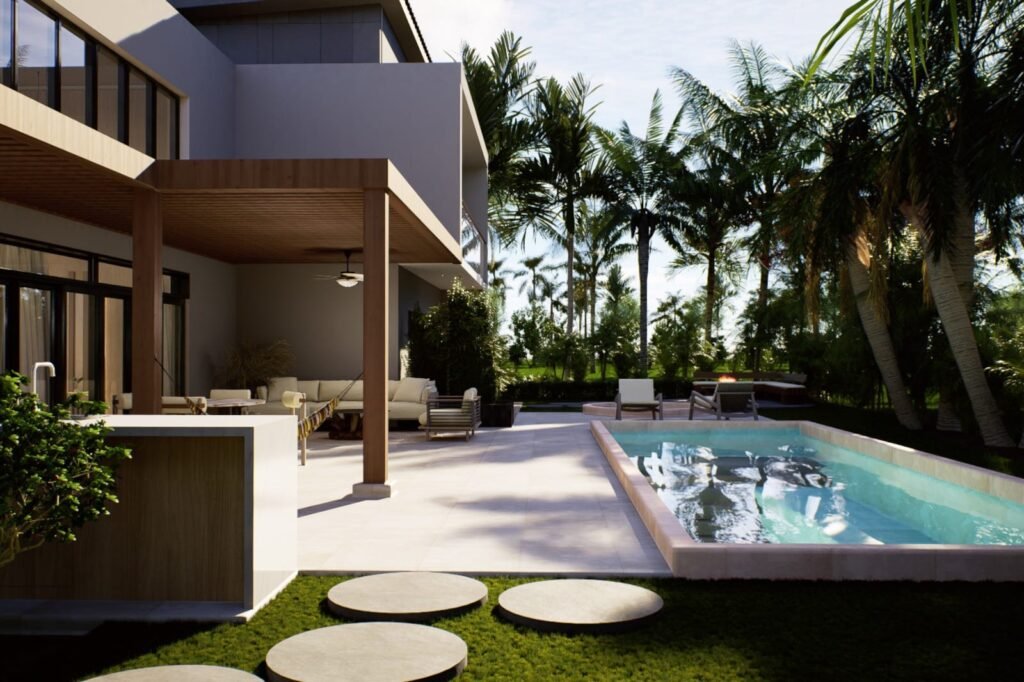
Sustainability has become a global priority, driven by the urgent need to address climate change and environmental degradation. In construction that has produced a shift towards sustainable building, which sets out to minimise the environmental impact of what we put up and to improve the wellbeing of the people who live in it. Against that background, sustainable villa construction is emerging as a key trend: luxury and comfort combined with ecological, efficient practice.
The principles of sustainable construction
Sustainable construction rests on several fundamental principles designed to reduce environmental impact and improve energy efficiency. They include:
- Efficient use of resources: minimising the use of materials and energy across the building’s life cycle, from construction through maintenance to demolition.
- Renewable energy: integrating renewable sources such as solar or wind to reduce dependence on fossil fuels.
- Passive design: using design strategies that exploit the local climate to reduce the need for heating, cooling and artificial light.
- Sustainable materials: using materials that are recyclable, locally sourced and low in environmental impact.
- Water management: installing rainwater collection and reuse systems, and water-saving technology.
- Indoor air quality: using materials and systems that improve indoor air and the health of the people breathing it.
Designing and planning a sustainable villa
Designing a sustainable villa calls for careful planning and a real understanding of the natural setting. Here are some of the key approaches:
Orientation and passive design
How the villa is oriented is crucial to energy efficiency. A well-planned design uses natural sunlight for heat and light, and shading techniques to keep the interior cool in summer. Passive design strategies include:
- Thermal insulation: using insulating materials in walls, roofs and floors to hold a comfortable interior temperature with minimal energy.
- Natural ventilation: designing cross-ventilation to improve air flow and cut the need for air conditioning.
- Natural light: maximising daylight through strategically placed windows and skylights.
Building materials
Sustainable materials are essential to an ecological villa. They need to be durable, low in environmental impact and, preferably, locally sourced, to cut the carbon footprint of transport. Examples include:
- Certified timber: wood from sustainably managed forests.
- Recycled materials: recycled steel, glass and concrete.
- Natural insulation: sheep’s wool, cork or recycled cellulose.
Renewable energy technology
Integrating renewable energy is an essential part of sustainable construction. A villa can be fitted with solar systems, both photovoltaic for electricity and thermal for hot water. Geothermal heat pumps can also be used for heating and cooling, drawing on the constant temperature below ground.
Water management systems
Managing water efficiently is another crucial area. A villa can use a range of systems to cut consumption and encourage reuse:
- Rainwater collection: systems to collect and store rainwater, which can go to irrigation or even into the plumbing.
- Efficient irrigation: drip systems and native planting that needs less water.
- Water-saving fittings: low-consumption taps, showers and sanitaryware.
Certifications and standards
Obtaining a sustainability certification is one way to demonstrate that a villa meets high ecological standards. Among the most recognised:
- LEED (Leadership in Energy and Environmental Design): an international certification system that assesses the sustainability of buildings.
- BREEAM (Building Research Establishment Environmental Assessment Method): another system for assessing building sustainability.
- Passivhaus: a standard focused on energy efficiency and indoor comfort.
What a sustainable villa gives you
Sustainable villa construction benefits more than the environment; it benefits the owners and occupants too. Among the clearest advantages:
Energy and cost savings
Sustainable villas are designed to be highly energy-efficient, which translates into lower electricity and heating bills. Over the long run, renewable energy systems can deliver significant savings and shield you from rising energy prices.
Comfort and health
Non-toxic materials and improved ventilation make for a healthier indoor environment. Better indoor air quality can reduce health problems such as allergies and respiratory conditions. Natural light and ergonomic design improve the comfort and wellbeing of the people living there.
Property value
Sustainable villas tend to hold a higher resale value thanks to their energy efficiency, durability and environmental credentials. Buyers are increasingly interested in properties that offer sustainable features and lower running costs. That initial premium is, at bottom, the same calculation you make when comparing the numbers on buying versus building: what you pay extra at the start against what you recover later.
Case studies
Looking at real examples of sustainable villas gives a clearer sense of how these principles work in practice. Here are two:
A bioarchitecture villa in Spain
This villa in Spain is a notable example of passive design and sustainable materials. The house is oriented to maximise solar gain in winter and minimise it in summer. It uses natural cork insulation and has a rainwater collection system. It is also fitted with photovoltaic solar panels and geothermal heating.
EcoVilla in Costa Rica
EcoVilla is a sustainable community in Costa Rica that combines luxury villas with advanced ecological practice. The villas use certified timber, green roofs and solar energy systems. Permaculture techniques are applied to landscape management and food production, creating a self-sufficient, sustainable environment.
The challenges
For all its benefits, sustainable villa construction faces real difficulties. The main ones:
- Up-front cost: sustainable materials and technologies can cost more at the start, though the long-term savings offset that.
- Technical knowledge: sustainable construction demands specialist knowledge and careful planning. Having professionals trained in sustainable design and building is essential.
- Regulations: navigating local rules can be complex, particularly in areas where sustainable practice has not been fully adopted yet.
Where this is heading
The future of sustainable villa construction looks promising, driven by technological advances and greater environmental awareness. Some of the emerging trends:
- Material innovation: new sustainable materials and more efficient construction technologies.
- Smart technology: intelligent systems that manage energy, water and other resources more efficiently.
- Modular and prefabricated construction: methods that reduce waste and allow faster, more efficient building.
Conclusion
Sustainable villa construction represents a commitment to the environment and to the wellbeing of the people who will live there. By combining ecological design principles, sustainable materials and renewable technology, it is possible to create living spaces that are both luxurious and responsible towards the planet. As more people and developers adopt these practices, sustainable building will become the norm, contributing to a greener and healthier future for everyone. None of this gets decided at the end: it gets decided on the drawings, which is where how a custom villa is planned and built begins.