Punta Cana used to be somewhere you came for two weeks and left. Now some people don’t leave: they stay all year, or spend the winter here and go home for the summer. The gap between visiting a place and living in it is wide, and it is worth understanding before you move.
These are the ten reasons people take the step, and what sits behind each one.
- Exceptional beaches. The coast running from Bávaro to Juanillo is white sand, warm water and a reef that breaks the swell. That is not brochure copy: it means you can swim on almost any day of the year, and that the beaches actually work with children. Each stretch has its own character — Bávaro is busy and full of services, Macao is open water with surf, and the Cap Cana beaches are access-controlled and nearly empty.
- Tropical climate all year. Temperatures sit around 25 to 30 °C with no real seasons, and a constant easterly breeze makes the humidity bearable. The dry season runs roughly December to April, which is when most people arrive. Hurricane season runs June to November: something rarely happens, but it is a real factor that shapes how a house here is designed and built, and it is better to know that beforehand than afterwards.
- Tourism and entertainment. The density of restaurants, marinas, golf courses and nightlife is that of a mature resort city, not a beach village. That carries a practical advantage people don’t expect: there is still something open off-season, because the destination never shuts down.
- Work in tourism. The economic engine here is tourism and everything orbiting it — hospitality, food, real estate services, maintenance, boating. If you arrive with your own business or work remotely, you will find suppliers and staff already used to dealing with an international clientele.
- Developed infrastructure. Punta Cana International is one of the busiest airports in the Caribbean, with direct flights to North America and Europe. For anyone keeping a life in two countries that changes everything: no connections, no day lost on each trip. Around it there are private hospitals, international schools, supermarkets and shopping centres.
- An international community. Dominicans live alongside American, Canadian, Spanish, Italian, Russian and Argentine residents, among others. Spanish and English both work perfectly well day to day, and there are established circles — sport, school, business — where fitting in doesn’t depend on having family in the country.
- Security. Most housing of this profile sits inside gated communities with access control, private security and camera systems. That is what explains the sense of calm people who live here describe: it is not a claim about the whole country, it is how the specific environment you’ll be living in actually works.
- Outdoors, year-round. Golf, diving, fishing, kitesurfing, riding, hiking nearby. The climate lets you do all of it twelve months a year — which is precisely what doesn’t happen in the countries most people move here from.
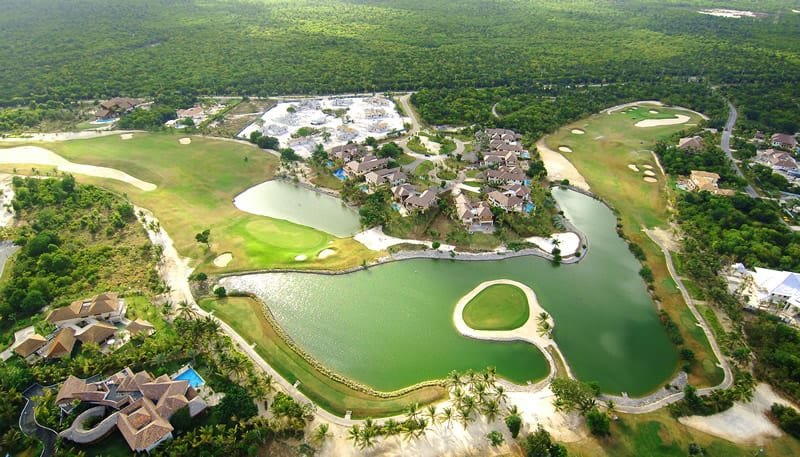
- Resort-grade amenities. The residential communities here come with a marina, a golf course, a beach club, a spa and restaurants inside the grounds. Living here usually means having hotel services without living in a hotel.
- Property as an investment. A foreigner has the same ownership rights as a Dominican and doesn’t need residency to buy. And a villa in this area has two possible uses: live in it, or rent it out part of the year, with demand that depends on international tourism rather than on the local market.
What the brochures leave out
Living in a tourist destination has a flip side, and it is only fair to say so. Some services are priced for the visitor, not the resident. In high season there is traffic and the best-known beaches fill up. And some formalities — a car, a bank account, utilities — take longer than you would expect coming from Europe or North America.
None of that outweighs the advantages for the people who decide to stay, but it is better to arrive knowing. The ones who settle in best are those who came several times before moving, ideally at different times of year.
Living here is not the same as holidaying here
The biggest practical difference is the house itself. A villa designed for two weeks a year and one designed to live in all year are not the same building: the orientation to sun and breeze changes, so does the treatment of materials against salt air, the insulation, the kitchen, the storage, and the maintenance you will be paying for over twenty years.
That is why many people who move here end up building rather than buying something finished. If you are at that point, you can see how turnkey villa construction works: how long each stage takes, when you pay and what guarantees you get in writing. And if you are still choosing an area, we have pages on Punta Cana, Cap Cana and Vista Cana setting out what distinguishes each one.